The Value of Talent: Bridging the Gap Toward a Solution
by Keith Brown, President & Owner, Siena Group
The Value of Talent: Bridging the Gap Toward a Solution
In Part 1 of this series from our most recent Thermoforming Report, we explored why measuring talent has always been difficult. Leadership capability, engagement, hiring quality, and culture all influence business performance – but rarely in ways that fit neatly into traditional operational metrics.
So what’s the solution?
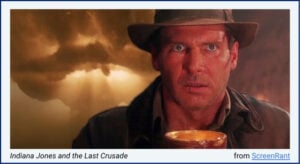
As we dug into possible solutions, we referenced a 10-year-old SHRM article (“The Holy Grail of Recruiting: How to Measure Quality of Hire,” November 2015), which attempted to tackle the challenge of measuring the value of talent. Candidly, it also reflects just how difficult that problem remains today.
If SHRM couldn’t fully solve it 10 years ago – and quite a few people smarter than me have spent years thinking about how to measure people and leadership – I’m certainly not about to pretend I’ve discovered the holy grail here either.
(Although I do appreciate a good fedora.)
Making Talent More Visible
Even the articles that prompted this analysis don’t always do a great job of translating the theory into practical execution. But they do point in the right direction.
In part 1, we referenced a CEO Magazine article,, “Why Measuring Talent ROI Has Been So Hard – and Why That’s Changing“, which outlines three practical ways ROI data can be used:
- Align Investments with Business and Market Realities: When things get uncertain and talent is at a premium, “the question isn’t whether to invest in people, but where investment will most directly stabilize the business.”
- Protect the Highest-Impact Investments: “Leadership development, wellbeing initiatives and culture efforts frequently top that list, not because they lack value, but because their impact is harder to quantify and defend financially. That dynamic changes when ROI data is available across people programs.”
- Drive Continuous Improvement: “The greatest impact from people programs rarely comes from wholesale reinvention.”
Taken together, these points reinforce a simple idea: when the impact of talent becomes more visible, decision-making improves.
The second CEO Magazine article referenced previously, “The Hidden Cost of Ignoring Leadership Capability,” highlights what happens when leadership capability breaks down inside an organization. Common patterns include:
- Consistent performance issues
- Blind spots in judgment or delivery
- Capability gaps that keep resurfacing
- Individual strengths that haven’t been harnessed
Most senior leaders recognize these issues. The challenge is not awareness, but action.
As the article explains, paralysis typically comes from four places:
- They don’t know where to start. Capability issues are interconnected and systemic. Fixing one area can feel destabilizing, so leaders often delay action waiting for clarity that never fully arrives.
- Time pressure. In fast-moving organizations, everything feels urgent. Development gets pushed out with the assumption it will be addressed later.
- A broken mental model of learning. Leaders default to courses and one-day programs. These approaches often build awareness, but not execution under pressure.
- Unclear return on investment. A $10,000 program may seem reasonable, but without a way to measure behavior change or business impact, it fails the investment test.
The article notes, “The issue isn’t awareness. It’s translating insight into action.”
That is where most organizations struggle.
The article goes on to suggest a more modern approach to building leadership capability:
- Learning happens in short, targeted bursts tied directly to live business challenges
- Capability is built through application, with theory supporting execution
- Leaders are supported by coaches in real-time decision-making
- Development happens in structured sprints, reinforced over time
- Progress is measured through behavior change and performance, not attendance
On paper, these principles make sense. In practice, however, many organizations still struggle to apply them consistently and at scale.
Designing Better Systems Around Talent
A recent Forbes article, “3 Ways to Stop Chasing Skills and Start Designing Systems That Turn Talent Into Metrics“, highlights another important shift taking place inside organizations. Too often, companies focus heavily on teaching new skills while overlooking how existing talent is actually being utilized inside the business.
The article argues that leading organizations are beginning to shift their thinking away from simply asking, “What new skills do we need?” Instead, they are asking a more operational question, “How can people, workflows, and responsibilities be aligned so employees contribute where they create the most value?”
That distinction matters.
In manufacturing environments especially, performance issues are not always caused by a lack of talent. Frequently, capable people are operating inside systems that fail to fully leverage their strengths. The article points toward several practical ideas:
- Structuring teams and responsibilities around demonstrated strengths
- Creating systems that support flexibility, accountability, and collaboration
- Using performance feedback and operational data to continuously improve workflows
- Applying technology strategically to reduce low-value distractions and allow employees to focus on higher-impact work
Taken together, these ideas reinforce a broader shift already happening across manufacturing. Talent is increasingly being viewed not simply as an HR function, but as an operational driver of business performance. And when organizations begin connecting people, systems, accountability, and outcomes more directly, performance becomes easier to improve – and easier to measure.
Real-World Application
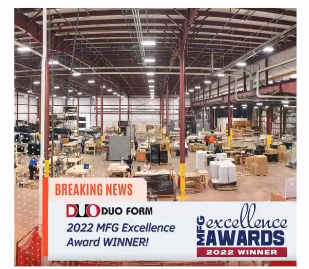
We see examples of companies beginning to operationalize these ideas successfully.
One of our clients, Duo-Form, was awarded Michigan Manufacturing Company of the Year in 2022, driven in part by strong culture and engagement initiatives. In a press release, Shelly Ditmer, President of Duo-Form, commented:
“We have reinvented the way we think about employee culture and engagement. Our focus on the DUO culture has resulted in increased productivity and effectiveness.”
That’s the key point. The organizations gaining traction are not treating culture, leadership, and engagement as disconnected initiatives. They are building systems that connect people, performance, accountability, and business outcomes more directly. My guess is that their initiative was not easy to measure even though they believed it was the right thing to do. Improved attrition is one metric that is telling but the award and more importantly the company’s results are where the real impact is felt.
Wrapping Up
The companies that will outperform over the long term are not necessarily the ones that invest the most in talent. They are the ones that make talent visible and invest accordingly – in both time and resources.
When leadership capability, hiring quality, engagement, and development are treated as measurable inputs to performance – rather than abstract concepts – decision-making changes.
And when decision-making changes, outcomes follow.
That is where the real advantage is created – when talent stops being theoretical and starts becoming operational advantage.
At Siena Group, we are your Thermoforming Talent Partner! We’re here to help in any and every way possible! With more than 30 years of experience in manufacturing, hiring & recruiting talent, we bring a greater understanding of the companies we partner with and the candidates we pursue. Let’s Strengthen Your Search!


Share our post with others
Love what you see? Share it with your connections now.