
Leadership Is More Than Following the Beat
by Keith Brown, President & Owner, Siena Group
Leadership: Knowing When to Push, Pause, and Change the Tempo
Manufacturing continues to change – often faster than organizations can comfortably absorb. The question isn’t whether change will come. It’s whether leaders can recognize what it requires and adjust their organizations accordingly.
A line from a recent Harvard Business Review article, How CEOs Set the Tempo, caught my attention: “Leadership’s overlooked skill is knowing when to accelerate, when to slow down, and why.”
There’s a lot of wisdom in that thought! Leadership isn’t just about setting a direction. It’s also about knowing how quickly an organization should move to get there.
As I read the article, I first thought about how it connects with our October Thermoforming Report, where we discussed how legacy is a present-tense leadership responsibility. From there, my thoughts turned to a metronome.
Music offers a useful way to think about organizational pace. Just as musicians must learn to keep time and respond to a conductor, company leaders must establish a rhythm their teams can follow – and recognize when that rhythm needs to change. Finding the right pace, adjusting it when necessary, and maintaining it over time is no easy task.
Setting Up the Metronome
First, I strongly recommend reading the HBR article, whether you are a CEO or a member of a team. CEOs can gain a fresh perspective on how their pace shapes an organization. Team members, much like musicians in an orchestra, also benefit from understanding their conductor – recognizing the direction being set, reading the signals, and responding accordingly. Gaining that perspective can help everyone better understand their role in moving organizations forward.
One observation from the article particularly stood out to me: “Strategy determines a CEO’s direction. Tempo determines whether the CEO arrives at the destination on time.” Candidly, I hadn’t thought about this relationship between strategy and pace quite that way before. Reflecting on my career, the organizational structures I’ve worked within, and leaders I’ve worked for, I began thinking about how their approaches to pace shaped the organizations.
Not everyone has a front-row seat to the CEO’s day-to-day decisions. But the effects of those decisions travel throughout the organization. A CEO’s approach influences VPs and Directors, who in turn shape the work of Managers and front-line Supervisors. The pace set at the top can ultimately be felt across the business.
The article also makes an important point about the example leaders set. A CEO’s approach to leadership is reflected not only in the decisions being made, but in how the organization experiences day-to-day leadership. Team members notice whether priorities move forward, whether guidance is available when needed, and whether the environment encourages patience or urgency. Over time, those signals shape how people approach their work and where the organization directs its attention and resources.
Tick Tock
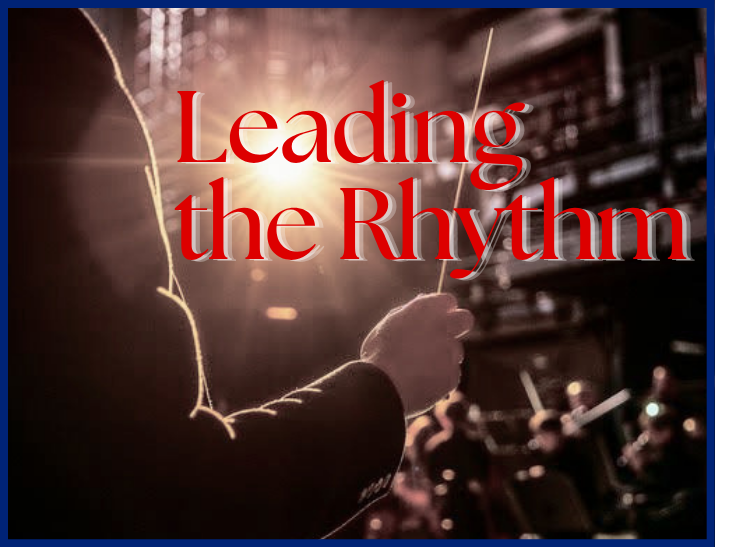
With the metronome in place, let’s set it in motion. The HBR article compares a CEO’s role to that of an orchestra conductor, who must keep time while adjusting the pace to suit the moment and the organization’s capacity.
The author identifies five distinct approaches to organizational tempo:
- Experimental Speed: Moving quickly to learn, test ideas, and determine what works when waiting carries greater risks than making an imperfect first attempt.
- Relentless Pressure: Maintaining an intense focus on performance and results.
- Disciplined Urgency: Moving decisively while balancing speed and precision.
- Front-Loaded Deliberation: Investing more time in planning and evaluation upfront to support faster execution later.
- Patient Compounding: Building progress through consistency, restraint, and the power of steady progress.
Each approach has advantages and drawbacks, and the right fit depends on the circumstances a company faces. I also think company size can influence its approach. Smaller organizations may be more inclined toward the faster-moving approaches, while larger organizations may gravitate toward a more measured pace. Of course, size alone shouldn’t dictate how a company operates.
Rather than dissecting all five approaches, I’d challenge you to consider where your own organization fits.
I suspect relatively few manufacturing companies would identify with Experimental Speed as their primary approach. That category may be more familiar in parts of the AI-development world, where rapid experimentation is central to the work.
For Relentless Pressure, it wouldn’t surprise me if a few fall into this category, though it is probably fairly limited. The Jack Welch model of evaluating performance (anyone recall being ‘force ranked’ or having to force rank their team members?!?) is not a great way to run an organization in my humble opinion. But you can’t argue with the results it can generate. The major downsides are burnout, short-term decisions, and a lot of politicking and sucking up.
Disciplined Urgency, on the other hand, may resonate with many of us. The ability to move quickly without losing sight of execution is valuable when a business needs to turn around performance or respond to changing conditions.
Front-Loaded Deliberation may be a better fit for “high-stakes, high-complexity situations”, such as medical devices or aerospace, where decisions made too quickly can carry significant consequences.
Finally, I think many larger organizations operate with the patience associated with Patient Compounding – sometimes when they shouldn’t. Scale can bring layers of decision-making and slow responses. In volatile markets or periods of economic upheaval, that lack of speed can make it harder to respond to changing customer needs and competitive pressures.
Understanding your organization’s tempo – whether largo (slow and broad) or allegro (fast and lively) – can help you recognize potential pitfalls and know when adjustments are needed to achieve your strategic objectives.
Influences
The HBR article then explores several factors that influence the leader and the organization, starting with those that are the least flexible and most rigid and moving toward those that are more fluid and subject to change.
- The leader’s temperament: A CEO’s personality and professional experiences can have a significant influence on how quickly they make decisions and expect others to act. That approach may evolve over time as the leader gains experience or takes on greater responsibility. But when a leader refuses to adapt to a major shift in the market, the consequences can be dire.
- The company’s life stage: Think about the difference between a small startup and a large company with multiple plants. They face very different demands. Their operating pace often reflects those differences. Still, neither size nor history should prevent a company from changing its approach. Sometimes, a fresh leadership perspective and a clear vision for change can help move an organization in a new direction.
- The nature of the business challenge: Remember COVID? Talk about a dramatic impact on pace! The speed at which things needed to happen to navigate the supply chain disruptions was crazy! Sometimes, though, the pace needs to slow down, particularly when a situation requires intense coordination or leaders are trying to change deeply rooted systems. Getting the timing wrong can be costly. The HBR article highlights Theranos and its breakneck speed, as well as BlackBerry’s reluctance to change. We know both stories, and both ended in disaster.
- Internal readiness: Every organization has its own pace. Adjusting it up or down requires a great leader who can assess the situation, gather input, and push and pull the right levers to make the needed changes – without breaking things.
- External pressures: Regulatory requirements, cyclic markets, global economic conditions, and other outside forces can influence how quickly a company needs to move. Effective leaders must recognize these pressures and determine when the organization needs to adapt its pace.
Taken together, these factors highlight the importance of reading the organization and recognizing when its current approach is no longer working. As the HBR article explains, leaders need to recognize when their teams are becoming exhausted or complacent, understand how their expectations are affecting people, and adjust their approach without creating unnecessary confusion.
The article also emphasizes the importance of paying attention to how work is progressing – whether initiatives are losing momentum, teams are simply reacting to events, or people are taking the initiative and moving things forward.
These ideas resonate with me, particularly given the many conversations I’ve had over the years about why people consider making a career move. The old adage that ‘people leave their bosses, not their companies’ often rings true.
When major changes happen – or when necessary changes fail to happen – employees feel the effects. Frustration builds when mid-level and senior leaders are left in the dark, guessing what comes next. It also builds when people identify a problem, recommend a solution, and then watch decisions stall while nothing changes.
Both situations create uncertainty, and that is often when I get a call!
Learning the Beat
Like anything, learning to recognize the right beat for your organization’s metronome – or adjusting its pace to match your strategy and the market – takes time and effort. As the HBR author explains, pacing is a skill leaders develop through experience, feedback, and paying attention to the signals their organizations send.
Rely on your trusted leaders. Listen to your team. Spend time on the manufacturing floor. Attend meetings and observe. Be present. Pay attention to how people are responding to the pressures of change – and whether they are becoming frustrated by changes that need to happen but aren’t.
It isn’t easy.
The author makes the case that a leader’s ability to manage organizational pace is an important part of turning strategy into results. As she puts it, “Tempo sits at the intersection of strategy and execution. It is where intent meets action.”
Let’s repeat those sentences: “Tempo sits at the intersection of strategy and execution. It is where intent meets action.” I couldn’t agree more!
Timing is everything! Have you ever stepped into a middle school band classroom for their first lesson? Let’s just say the timing is a bit off, and it doesn’t sound very good! It takes a lot of practice and dedication for the band to come together – and for that, they need a great conductor. That’s what a great leader does for his or her organization!
At Siena Group, we are your Thermoforming Talent Partner! We’re here to help in any and every way possible! With more than 30 years of experience in manufacturing, hiring & recruiting talent, we bring a greater understanding of the companies we partner with and the candidates we pursue. Let’s Strengthen Your Search!


Share our post with others
Love what you see? Share it with your connections now.