
A Reason for Optimism.
by Keith Brown, President & Owner, Siena Group
Manufacturing Has a Lot to Figure Out. It Also Has a Lot to Look Forward To.
As a follow-up to our Thermoforming Report, where we highlighted an article discussing a variety of scenarios around the ‘comeback of manufacturing,’ we came across a Forbes article in which the author, Dave Evans, explains “why [he’s] never been more optimistic about American manufacturing.” It provides a great perspective on how he views what is happening – and what he sees coming – in this critical sector of the economy.
Training
There’s been a lot of talk about upskilling the workforce. With all of the new tools, technology, and now AI on the scene, this seems obvious. But Evans shares a crazy statistic: “About seven years ago, U.S. manufacturers were spending roughly $2.26 billion a year on workforce training. Today, that figure is approaching $32 billion.” That is astounding!
He surmises that the old model of “hire someone who already knows how to do this” is over. And that means talent needs have changed.
Complexity
In the article, Evans uses the example of how dramatically the complexity of our products has changed over the years.
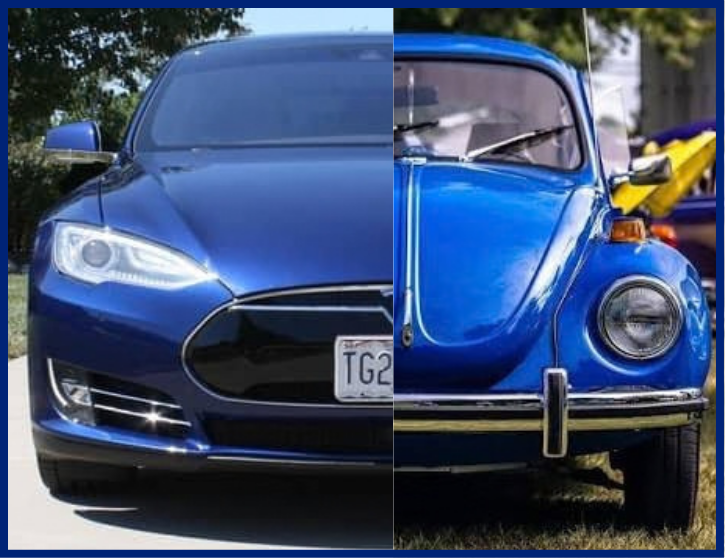
Cars are a pretty good example of that. I remember when we used to be able to work on our own cars. The number of oil changes, spark plug changes, changing and adjusting points, and even changing out clutch plates and a tranny or two in my day – as a kid – is impossible to count. My dad basically did all the normal car maintenance, and, as the youngest of three siblings, made me help. It wasn’t overly complicated. But oh, has that changed!
The author states, “We’re not training people to do the same job better. We’re training them to do jobs that didn’t exist a decade ago.”
Precision
As the article progresses, Evans brings into focus the kind of manufacturing that requires a fundamental shift in precision. His example of building a robot requires a level of precision that is hard to imagine. Though most people reading this are neither accustomed to nor required to work with that kind of tolerance in the parts and products you make, the idea – and the need for greater precision – extends well beyond robotics.
Doing things faster with more integrated technology will require doing things differently. And that will take investment and patience.
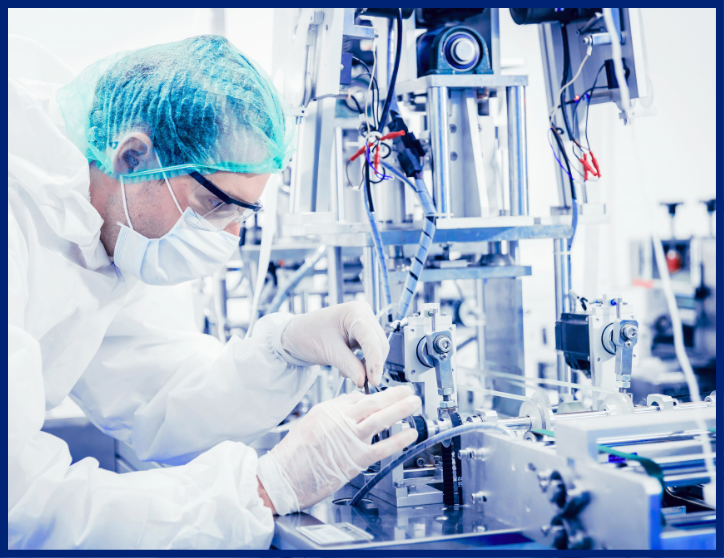
An interesting personal anecdote that I believe I’ve shared previously aligns well with this idea of precision. I led manufacturing of a Class II medical (diagnostic) device via liquid fill processing in small quantities and at high speed. The Site Director asked me to attend a high-level review meeting (all execs, plus a renowned Research Scientist in the industry) for a novel idea that represented a new diagnostic product. In the review, the product was tested and proven to work within stated – and very tight – tolerances. The challenge was whether we could manufacture it consistently at the required speed and volume using our existing process and equipment.
The general positivity in the room and discussions about next steps were (respectfully) halted when I jumped into the conversation, pushing back with: “We can’t manufacture that at speed. We just aren’t capable of those tolerances.” If my boss across the table from me had long enough arms, he would have slugged me!
But that’s exactly why I was in the room – to offer up my perspective, knowledge, and experience in manufacturing. It wasn’t an opinion on the new product. It was a stated fact that, with our current process, the required tolerances would not be consistently met at the required speed. It wasn’t up to me to come up with the solution to the problem, but it would have taken a fundamental redesign of our fill equipment to manufacture those small volumes with those very tight tolerances at the required speeds. It meant doing things differently and engineering a solution that hadn’t previously existed in the company.
Regardless of the type of manufacturing, precision, quality, and speed are no longer optional – they’re the new norm.
The Perception Problem
Because so many American manufacturers are small, the challenge is huge – and Evans surmises that this is also where the opportunity is greatest. Having worked in manufacturing for 20 years, I can tell you that the perception of our overall sector and industry is not great, especially among the younger generations.
Interestingly, and as discussed in previous Thermoforming Reports and Blogs, there has been a massive sea change in the perception of blue-collar jobs. HVAC techs, electricians, plumbers, carpenters, and more have become much more sought after and desired careers.
But not manufacturing.
And that’s a huge miss and a mistake by the industry. EVERYTHING is manufactured! As I sit at my desk typing this up, there is not one single thing in my field of vision that wasn’t manufactured. ZERO.
Manufacturing is so ingrained into our society that we simply take it for granted. But there are millions of people out there who make stuff every day! The problem is, they’re more gray-haired than not. And this must change.
Attitude is Everything
Evans brilliantly makes this point: “You can’t coach attitude, but you can teach almost anything else.” That statement is key!
The willingness to learn and try new things – and to get back up when you fail – is unfortunately rarer than it should be.

As a head coach in travel baseball for years, and now as an assistant coach with a high school baseball team, I’ve really tried to stress to the boys the importance of approach and attitude. It doesn’t take too many scrolls through baseball tips and tools videos at all age groups and levels to find out that having the right attitude – in team practices, solo workouts, and ball games – can make the difference in your success at a very challenging game.
The hope is that the mindset of always wanting to get better, always wanting to learn, always being willing to go the extra mile, and always picking yourself up after a failure will help them to grow into successful young men in whatever endeavor they choose. Simply put, that attitude and approach to life – and to baseball – are critical.
Optimism in the Face of Challenge
As I reflect back on what the article is highlighting, I’m struck by three things.
First, training the workforce is non-negotiable because the required skills simply do not broadly exist in the marketplace. The speed of change is not going to slow down, so it would make sense for manufacturers to build high-level and focused learning, training, and development into their culture.
Second, with all the change and challenge around complexity and precision, it’s going to take the right people in the right places to make things happen. And it is going to take investment and a bit of risk. But the dividends are there for those leaders willing to do what it takes to leverage advances in technology and put them into practice.

Third, the perception problem for manufacturing – and getting even more granular, plastics manufacturing – is huge. All the professional associations out there need to figure out how to pool their resources, get a few high-profile people to be vocal about it, and run campaigns that fundamentally shift how we as Americans view manufacturing as a career. There is a positive general attitude about manufacturing. I’d guess most would choose to “buy American” if given the option. But, even though it is at the core of who we are as Americans – manufacturing just doesn’t even feel like much of a career choice anymore.
We must begin to appeal to a broader audience – and specifically to younger people, including high school juniors and seniors – and show them that manufacturing is a great career choice. And those who are willing to invest the time to learn and grow as technology advances – and bring the right attitude and approach – will have a long and successful career.
I agree wholeheartedly with the author as he wraps up with this powerful observation about why he is optimistic about the future of manufacturing: “[Manufacturing is] rebuilding itself with more intention than it’s had in decades. [It] is having its most interesting decade in my lifetime. We just have to keep telling that story loudly enough for people to hear it.”
At Siena Group, we are your Thermoforming Talent Partner! We’re here to help in any and every way possible! With more than 30 years of experience in manufacturing, hiring & recruiting talent, we bring a greater understanding of the companies we partner with and the candidates we pursue. Let’s Strengthen Your Search!


Share our post with others
Love what you see? Share it with your connections now.